H31-311_Part1
QUESTION 1
Dispersion types is mainly classified into chromatic dispersion and polarization mode dispersion. Polarization mode dispersion (PMD) has a greater impact on fiber transmission systems than chromatic dispersion (CD) .
A. TRUE
B. FALSE
Correct Answer: B
QUESTION 2
Compared with wireless communications, wired communications has advantages of more stable transmission, better resistance to interference, high transmission speeds, and high security.
A. TRUE
B. FALSE
Correct Answer: A
QUESTION 3
The connector shown in the following figure is usually used in scenarios with high incident power, such as Raman amplification.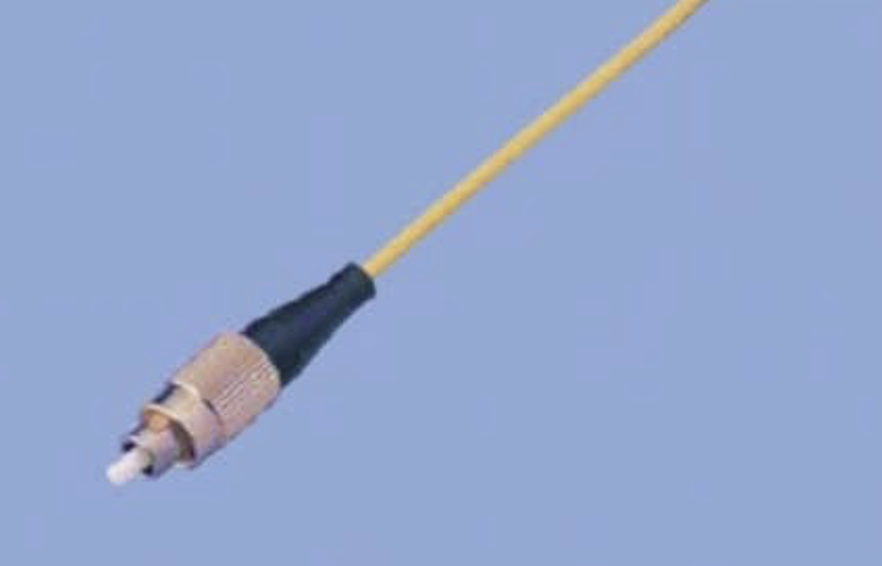
A. TRUE
B. FALSE
Correct Answer: B
QUESTION 4
Which of the following statements about PDH and SDH is correct?
A. The maximum SDH signal rate is 100 Gbit/s.
B. Both PDH and SDH are TDM technologies.
C. PDH uses the synchronous multiplexing mode.
D. SDH uses asynchronous multiplexing.
Correct Answer: B
QUESTION 5
Which of the following statements about optical transmission networks are correct?
A. WDM devices are for small-granularity service access scenarios.
B. OTN devices are for ultra-long-haul transmission on backbone networks.
C. MSTP devices are for large-scale data center interconnection scenarios.
D. MS-OTN devices are for multi-service access on metro networks.
Correct Answer: BD
QUESTION 6
1+1 linear MSP uses the dual fed and selective receiving mechanism for protection.
A. TRUE
B. FALSE
Correct Answer: A
QUESTION 7
Which of the following statements about the frame structure of SDH signals are correct?
A. SOH consists of regenerator section overhead (RSOH) and multiplex section overhead (MSOH).
B. STM-N is a rectangle-block frame structure of 9 rows x 270 N xN columns.
C. The payload area carries only information blocks, and does not contain any overheads.
D. Administration unit pointer (AU-PTR) is used to locate a low-rate signal in the STM-N frame (payload).
Correct Answer: AD
QUESTION 8
Different vendors’ SDH optical interfaces operating at the same rate have different modulation formats and frame structures.
A. TRUE
B. FALSE
Correct Answer: B
QUESTION 9
Wavelength division multiplexing (WDM) technology multiplexes optical signals of the same wavelength into the same optical fiber for transmission.
A. TRUE
B. FALSE
Correct Answer: B
QUESTION 10
Which of the following statements about the wavelength division of a DWDM system is incorrect?
A. The channel spacing of a Super C band 80-wavelength DWDM system is 50 GHz.
B. Compared with the traditional C-band 80-channel DWDM system, the 96-channel DWDM system has 16 more channels.
C. A traditional C band 80-wavelength DWDM system provides 40 odd wavelengths and 40 even wavelengths.
D. The channel spacing of both a traditional C band 80-wavelength DWDM system and an extended C band 96-wavelength DWDM system is 50 GHz.
Correct Answer: D
QUESTION 11
Which of the following WDM sites is used to amplify optical signals in bidirectional transmission to extend the transmission distance?
A. OTM
B. OLA
C. FOADM
D. ROADM
Correct Answer: B
QUESTION 12
The AWG multiplexer/demultiplexer has the following advantages: small wavelength spacing, lots of channels, and flat passband. It is suitable for WDM systems with ultra-high speed and large capacity.
A. TRUE
B. FALSE
Correct Answer: A
QUESTION 13
Which of the following is the OTN hierarchy from the client side to the WDM side?
A. Client->OPUk->ODUk->OTUk
B. Client->OTUk->ODUk->OPUk
C. Client->ODUk->OPUk->OTUk
D. Client->OPUk->OTUk->ODUk
Correct Answer: A
QUESTION 14
Which of the following statements about maintenance overheads in an OTN frame is incorrect?
A. AIS is transmitted downstream to indicate that a signal failure is detected in the upstream direction.
B. OCI is transmitted downstream to indicate that the upstream signal is not connected to the trail termination source node.
C. LCK is transmitted to the downstream direction to indicate that the upstream signal connection is locked and no signal passes.
D. BDI is transmitted to the downstream direction to indicate that a signal failure is detected in the upstream direction.
Correct Answer: D
QUESTION 15
What are the advantages of OTN?
A. Flexible networking
B. Multi-service transmission
C. Large-granularity service transmission
D. Powerful OAM functions
Correct Answer: ABCD
QUESTION 16
Which of the following statements about ports on an Eos board are correct?
A. The port on the front panel of the board is an external port, which is usually used to directly connect to the client-side equipment.
B. VCTRUNK ports are internal ports, which are used to encapsulate and map Ethernet services to the transmission network for transparent transmission.
C. One VCTRUNK port can be bound with multiple VC12/3/4 timeslots at different rates at the same time.
D. VCTRUNK ports can be deleted on the NMS.
Correct Answer: ABD
QUESTION 17
For a standard Ethernet frame, the minimum frame length is 64 bytes, and the maximum frame length is 1518 bytes.
A. TRUE
B. FALSE
Correct Answer: A
QUESTION 18
Which of the following statements about an N401 board is correct?
A. It supports one OTU4 line port.
B. It supports four 10GE service ports.
C. It supports one 100GE service port.
D. It supports four 10G line ports.
Correct Answer: A
QUESTION 19
Which of the following statements about a U402 board are correct?
A. It does not support inband DCN.
B. It does not support LAG.
C. It supports SDH linear MSP.
D. It supports OD Uk SNCP.
Correct Answer: CD
QUESTION 20
Which of the following is not an EoS service board?
A. EGS4
B. EMS10
C. EFS8
D. EG10
Correct Answer: D